
Tư vấn
The 7 Key Elements Of A Successful Marketing Mix Strategy

Th4
The marketing mix is a foundational concept in modern business management that describes the set of tools a company uses to promote its brand or product in the market. Since its inception, this framework has helped businesses coordinate various elements to meet the needs of their target audience effectively. A well-defined marketing mix allows organizations to make strategic decisions regarding product development, pricing, distribution, and communication. By aligning these components, companies can create a cohesive marketing strategy that drives growth and enhances customer satisfaction. Understanding how each element interacts with others is crucial for any business professional looking to achieve long-term success in a competitive environment.
Understanding the concept of marketing mix in business
The marketing mix refers to a collection of controllable variables that a company combines to produce the desired response from its target market. This concept was first popularized by Neil Borden in the mid-20th century and later refined into the famous 4Ps model by E. Jerome McCarthy. At its core, the marketing mix serves as a roadmap for tactical implementation, ensuring that all aspects of a product or service are aligned with the overall goals of the organization. Businesses use this framework to analyze their current offerings and identify areas where they can improve their market position.
In today’s digital age, the marketing mix remains relevant because it provides a structured approach to complex market dynamics. Whether a company is selling a physical product or a digital service, the fundamental principles of balancing quality, cost, and availability remain the same. A strong marketing mix helps managers allocate resources efficiently and respond to competitor actions with precision. By focusing on the marketing mix elements, a brand can ensure that it delivers value to the right people at the right time through the most effective channels.
Developing a marketing mix requires deep market research and a clear understanding of consumer behavior. It is not a static plan but a dynamic set of tools that must be adjusted based on market trends and feedback. When a business masters its marketing mix, it can build a sustainable competitive advantage and establish a loyal customer base. The integration of various tactics under the marketing mix umbrella ensures that the brand message is consistent across all touchpoints, which is essential for building trust and recognition in a crowded marketplace.
The core components of the 4Ps marketing mix model
The 4Ps represent the traditional foundation of the marketing mix and include product, price, place, and promotion. These four elements work together to define how a business reaches its customers and delivers value. Each P must be carefully planned to support the others, creating a unified marketing strategy that resonates with the audience.
Product strategy in the marketing mix
The first element of the marketing mix is the product, which refers to the actual goods or services offered to customers. A successful product strategy focuses on solving a specific problem or fulfilling a need for the consumer. Businesses must consider features, quality, design, and branding when developing their product. In the context of the marketing mix, the product is the core value proposition that determines the success of all other elements. If the product does not meet market demands, even the best promotion or pricing will fail to generate long-term sales.
Pricing strategy and its impact
Price is the amount of money customers must pay to obtain the product. An effective pricing strategy within the marketing mix considers production costs, competitor prices, and the perceived value of the product to the consumer. Pricing can be used as a tool to position a brand as a luxury option or a budget-friendly alternative. Within the marketing mix, price is the only element that generates revenue, while the others represent costs. Therefore, finding the right balance is essential for maintaining profitability while remaining attractive to the target market.
Place or distribution channels in the market
Place refers to the distribution channels and locations where the product is available for purchase. In a marketing mix, the goal of the place element is to ensure that the product is accessible to the customer at the right time and location. This involves selecting wholesalers, retailers, or online platforms that align with the brand image. A robust marketing mix ensures that the logistics and supply chain are optimized to prevent stockouts and provide a seamless purchasing experience for the consumer.
Promotion mix to reach target audiences
The promotion mix includes all the activities used to communicate the benefits of a product to the target audience. This encompasses advertising, public relations, social media marketing, and sales promotions. Within the marketing mix, promotion is responsible for creating awareness and persuading potential customers to take action. A well-coordinated promotion mix ensures that the brand message is clear and reaches the intended demographics through the most effective communication platforms.
Expanding to the 7Ps marketing mix for service industries
As the global economy shifted toward services, the traditional 4Ps were found to be insufficient for addressing the unique challenges of intangible offerings. This led to the creation of the 7Ps marketing mix, which adds people, process, and physical evidence to the original model. This expanded marketing mix provides a more comprehensive framework for businesses that rely on human interaction and service delivery.
People as a crucial element
In the service marketing mix, people refer to the employees who interact with customers and deliver the service. The quality of these interactions can significantly influence customer satisfaction and brand perception. Therefore, training, recruitment, and company culture are vital components of the marketing mix for service-based businesses. Having the right people in place ensures that the brand values are communicated effectively and that customer needs are met with professionalism and empathy.
Process in delivering customer value
Process describes the procedures, mechanisms, and flow of activities by which a service is delivered to the customer. A smooth and efficient process is a key part of the marketing mix because it directly impacts the customer experience. Whether it is the booking process at a hotel or the checkout flow on an e-commerce site, every step must be optimized for speed and convenience. Within the marketing mix, a well-defined process reduces errors and ensures consistency in service quality, which helps build long-term customer loyalty.
Physical evidence in the service environment
Since services are intangible, customers often look for physical cues to evaluate the quality of what they are buying. Physical evidence includes the environment where the service is delivered, such as the design of an office, the layout of a website, or the appearance of staff uniforms. In the 7Ps marketing mix, providing tangible proof of quality helps reduce the perceived risk for the customer. Elements like branding materials, receipts, and the cleanliness of a physical location all contribute to the overall marketing mix by reinforcing the brand promise.
Importance of marketing mix in developing business strategy
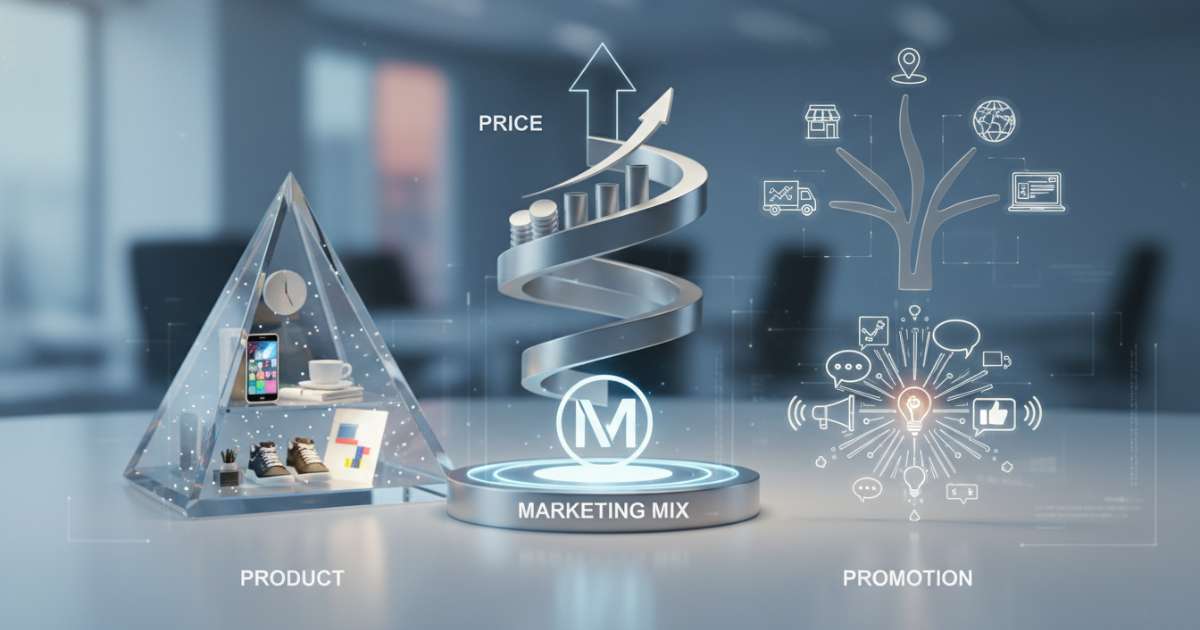
The marketing mix is essential because it provides a structured framework for making complex business decisions. By analyzing each component, managers can ensure that their marketing strategy is holistic and well-coordinated. One of the primary benefits of using the marketing mix is that it helps identify the strengths and weaknesses of a business plan before it is implemented in the real world.
Furthermore, the marketing mix assists in resource allocation by highlighting which areas require more investment. For example, if a company has a great product but low sales, the marketing mix analysis might reveal that the promotion mix is weak or the distribution channels are inefficient. By adjusting these variables, the company can improve its performance without wasting money on unnecessary product changes. The marketing mix also allows businesses to adapt to changing market conditions by providing a set of levers that can be adjusted to maintain competitiveness.
Another critical aspect of the marketing mix is its role in brand positioning. Every decision made regarding product, price, place, and promotion contributes to how the brand is perceived in the minds of consumers. A consistent marketing mix ensures that the brand identity remains clear and strong across different markets. This consistency is vital for building brand equity and ensuring that the business can command premium prices and maintain customer loyalty over time.
Steps to build an effective marketing mix for your brand
Creating a successful marketing mix requires a systematic approach that starts with a deep understanding of the target market. The first step is to conduct thorough market research to identify customer needs, preferences, and pain points. This data serves as the foundation for the entire marketing mix, ensuring that every decision is based on actual market demand rather than assumptions.
Once the market research is complete, the next step in building a marketing mix is to define clear objectives. These goals should be specific, measurable, achievable, relevant, and time-bound. For instance, a business might aim to increase market share by ten percent within a year. With these objectives in place, the company can then begin to develop the individual elements of the marketing mix, starting with the product features and the pricing strategy that will appeal to the target audience.
The final stage of developing a marketing mix involves integrating all the elements to ensure they work together harmoniously. This means that the promotion mix must accurately reflect the product benefits, and the distribution channels must be appropriate for the price point. After the marketing mix is launched, it is important to monitor the results and gather feedback from customers. Continuous optimization of the marketing mix allows a business to stay relevant and respond quickly to any changes in the competitive landscape or consumer behavior.
Common challenges when implementing a marketing mix strategy

While the marketing mix is a powerful tool, implementing it effectively comes with several challenges. One of the most common issues is a lack of internal consistency between the different elements. For example, if a company promotes a product as a high-end luxury item but uses low-quality distribution channels, it creates confusion and damages the brand image. Ensuring that all parts of the marketing mix are aligned requires strong communication and coordination across different departments within the organization.
Another challenge is the rapidly changing market environment. Consumer preferences, technological advancements, and competitor actions can all make a previously successful marketing mix obsolete overnight. Businesses must be agile and willing to adjust their marketing strategy frequently to keep up with these changes. This requires a commitment to ongoing market research and a flexible approach to the marketing mix elements. Failure to adapt can lead to a loss of market share and declining profitability.
Finally, measuring the direct impact of each element in the marketing mix can be difficult. While it is easy to track sales, determining exactly how much of that success is due to the promotion mix versus the pricing strategy can be complex. Modern data analytics and marketing attribution models can help, but they require significant investment in technology and expertise. Despite these challenges, the marketing mix remains an indispensable framework for any business that wants to navigate the complexities of the modern marketplace and achieve sustainable growth.
Choosing the right environment for your business operations is a critical part of your overall strategy. At Regus, we provide professional office spaces that allow you to focus on your marketing mix and business growth while we handle the facilities. Our flexible workspaces are designed to meet the needs of modern companies, offering high-quality amenities and a professional atmosphere that enhances your brand image.
By renting an office at Regus, you gain access to a global network of business centers and a community of professionals. This environment fosters networking and provides the physical evidence of success that is so important in the service marketing mix. Secure a workspace that supports your goals and gives your team the tools they need to succeed in a competitive market.
🌐 Website 1: https://regus.info.vn/
🌐 Website 2: https://kingofficehcm.com/
